If you are repainting cabinets or refreshing a dated kitchen on a budget, mixing metal finishes can be the secret weapon that makes the whole space feel custom. It is also one of the easiest ways to accidentally create a random, “I used what was on sale” look.
I have painted a lot of kitchens where the faucet is chrome, the light is black, the knobs are brass, and the hinges are… whatever the builder installed decades ago. The good news is that mixed finishes absolutely work when you follow a few simple rules.

The goal: intentional, not identical
You do not need every metal in the kitchen to match. In fact, a perfectly matched set can look a little flat, especially after a cabinet paint update where you want warmth and depth.
What you do want is a plan that feels consistent. Think “curated” instead of “collected over time.”
- Pick a lead finish that shows up the most (usually cabinet hardware).
- Add one supporting finish (often the faucet or lighting).
- Use 2 finishes as a starting point for a small kitchen, or 2 to 3 for an open concept space.
My 3 rules for mixing finishes
Rule 1: Repeat each finish at least twice
This is the rule that makes mixed metals look designed. If you introduce a finish, echo it somewhere else so it reads as a choice.
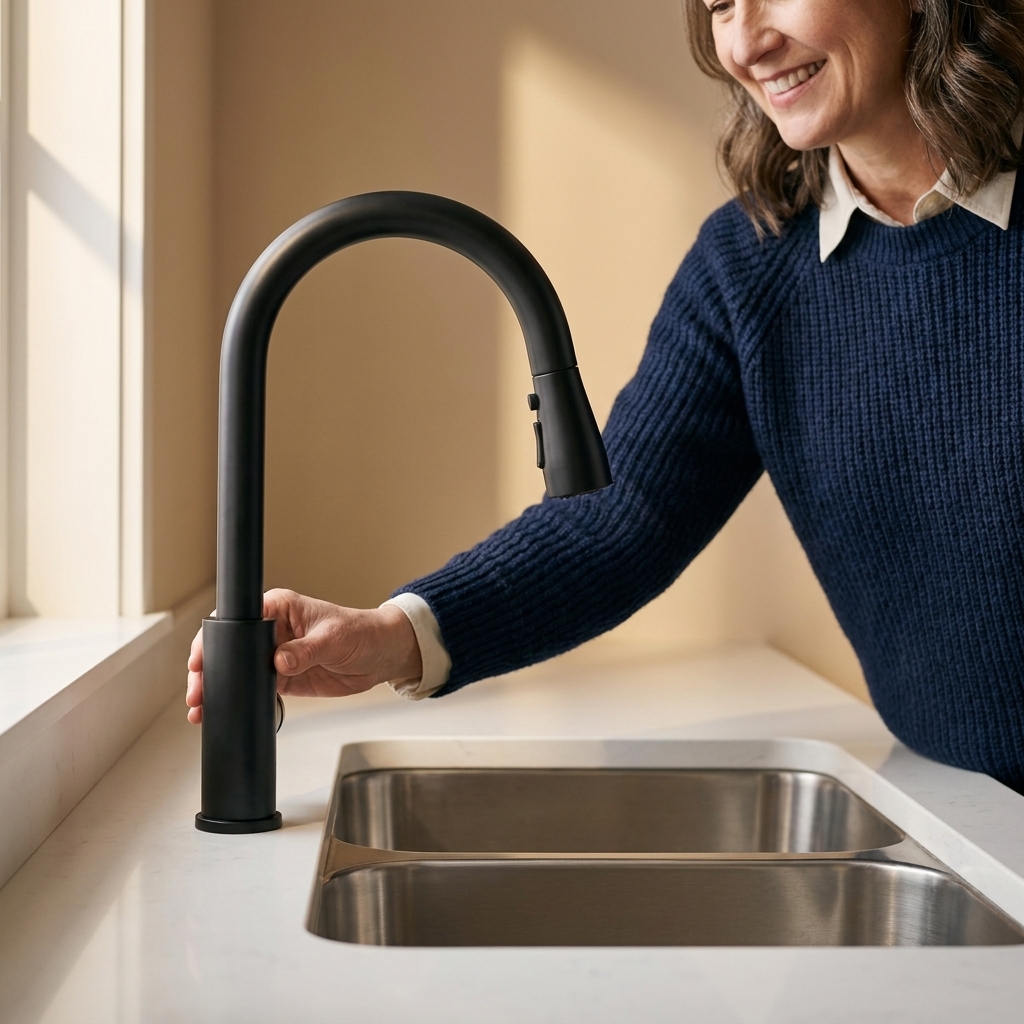
- Matte black faucet? Repeat black in pendants, bar stools, or a cabinet latch.
- Brass knobs? Repeat brass in a light fixture, shelf brackets, or a decorative rail.
- Stainless appliances you are keeping? Repeat that family with brushed nickel hardware or a stainless hood detail.
If a finish appears only once, it tends to look accidental.
Rule 2: Keep undertones friendly
Not all “silver” finishes play nicely together. Pay attention to undertone, and always test in your lighting if you can. Stainless, in particular, varies a lot by brand and can swing warm or cool depending on the room.
- Warm silvers: brushed nickel, satin nickel, some stainless. These are softer and mix beautifully with brass.
- Cool silvers: chrome and other highly polished silvers. These can feel sharper and more modern.
- Warm golds: brushed brass, satin brass, antique brass.
- Bold darks: matte black, oil-rubbed bronze (which usually reads warm).
My favorite beginner-friendly combo is brushed nickel + brass or matte black + brass. Chrome + brass can work, but it is fussier, and you need a clear reason for both to exist.
Rule 3: Keep sheen in the same lane
Shiny and muted can be mixed, but it is harder to make it feel calm. If your kitchen is already busy with counters, backsplash, and open shelves, keeping sheens consistent is usually an easier win.
- If your faucet is matte black, consider matte or satin hardware finishes.
- If your look is glam and bright with a glossy backsplash, a polished nickel or polished brass moment can look amazing, just repeat it.
Start with an anchor finish
When I help friends plan a cabinet paint job, we pick the anchor finish first. It is the one you see the most, and it sets the tone.
Option A: Anchor with cabinet hardware
This is my go-to for budget kitchens because hardware is easier to swap than a faucet or lighting.
- Painted cabinets + brass pulls feels warm, updated, and classic.
- Painted cabinets + matte black pulls looks modern and crisp, especially with white or light gray paint.
- Painted cabinets + brushed nickel is safe in the best way and plays well with stainless appliances.
Option B: Anchor with the faucet
If you already bought a faucet you love, let it lead and build the rest around it.
- Black faucet: pair with black or warm metals, and be cautious about adding multiple cool, shiny silvers.
- Brushed nickel faucet: you can go brass or black for hardware and it will still feel balanced.
- Chrome faucet: keep the rest tighter, usually chrome or polished nickel plus one warm accent.
Easy finish formulas
Brass + matte black
Brass brings warmth. Black adds structure. Together they can make even a budget backsplash look intentional.
- Try: brass knobs and pulls, black faucet, black pendants.
- Paint colors that love this: warm white, greige, sage green, deep navy.
Brushed nickel + brass
This combo works in traditional, transitional, and cottage kitchens. It is also forgiving if you have stainless appliances.
- Try: brushed nickel faucet, brass cabinet pulls, brushed nickel lighting or vice versa.
- Tip: keep both finishes more satin than shiny.
Stainless + matte black
If you have stainless appliances and do not want gold tones, black is the easiest second finish.
- Try: stainless or brushed nickel faucet, black hardware, black light fixtures.
Chrome + brass
This can be beautiful, especially in vintage-inspired kitchens. It just needs a little extra planning.
- Try: chrome faucet and lighting, brass hardware, and one more brass moment like a soap dispenser or shelf bracket.
- Avoid: adding a third finish unless the space is large and open.
Choosing the right brass
“Brass” is not one finish, and this is where a lot of kitchens go sideways. If your brass does not match, it reads like a mistake even when the overall plan is solid.
- Bright lacquered brass looks more traditional and shiny. It can feel dressier, and it shows fingerprints more.
- Brushed or satin brass is softer and more forgiving. It is my default for painted cabinets because it looks warm without screaming.
- Antique brass (or “vintage brass”) leans deeper and slightly brown. It plays nicely with warm woods and oil-rubbed bronze.
My practical tip is to buy all the brass pieces from the same brand or product line when you can. If you cannot, at least compare them side by side in your kitchen lighting before you commit.
Durability and upkeep
In a budget kitchen refresh, you want finishes that hold up to real life.
- Unlacquered brass: will patina and darken over time. Some people love the living finish, some hate it. Know which camp you are in.
- Lacquered brass and plated finishes: tend to look consistent longer, but can chip if the quality is low or the install gets rough.
- Matte black: often shows water spots around the sink depending on your water hardness and the coating. It is usually easy to wipe down, just plan on doing it.
- Brushed and satin finishes: tend to hide smudges and fingerprints better than polished finishes.
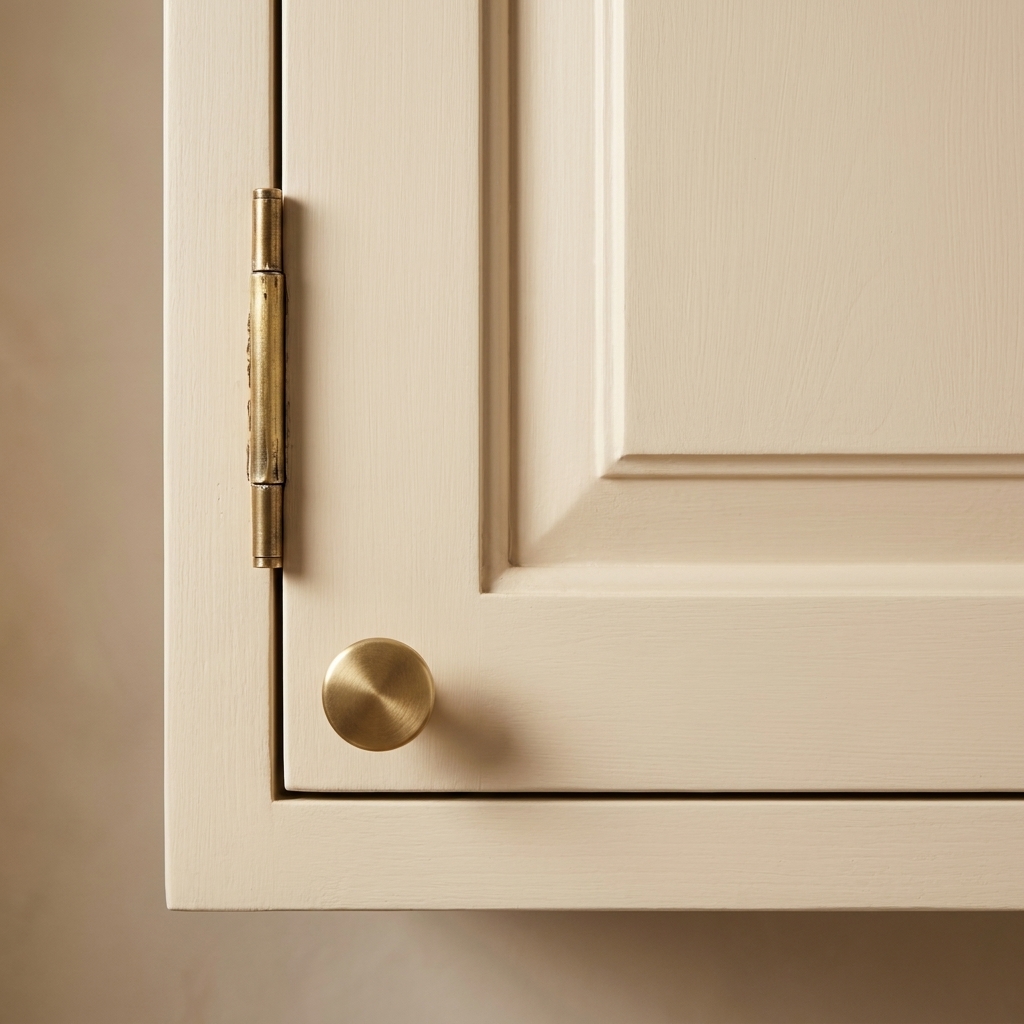
What about hinges?
Hinges are the sneaky detail that can make mixed finishes feel messy, especially on painted cabinets where everything looks crisp and new.
If you have concealed hinges
Celebrate. You do not need to think about them. Focus on knobs, pulls, faucet, and lighting.
If you have exposed hinges
You have three realistic choices:
- Match hinges to your hardware if you want a clean, traditional look.
- Match hinges to your cabinet color by painting them (only if they function smoothly after paint, and only with the right prep).
- Let hinges match the door knobs and allow the faucet to be your secondary finish.
My practical advice: If replacing hinges would blow the budget, do not let them dictate everything. Choose hardware you love, then repeat the hinge finish somewhere small so it feels intentional.
Mixing finishes with existing pieces
This is the real-world scenario in most budget cabinet makeovers. You are keeping the faucet, or the light, or the appliances, and you want new hardware to work with what is staying.
If you are keeping stainless appliances
- Brushed nickel hardware is the easiest match.
- Brass hardware is a great warm contrast, especially with white or greige cabinets.
- Matte black hardware works if you repeat black elsewhere (lighting, faucet, stools).
If you are keeping a chrome faucet
- Option 1: choose chrome or polished nickel hardware and add warmth with wood accessories.
- Option 2: choose brass hardware, then repeat brass at least once more, and keep other metals minimal.
If you are keeping oil-rubbed bronze
Oil-rubbed bronze reads warm and traditional. It pairs well with brass, and it can pair with matte black if the tones are similar. It is trickier with cool silvers.
A real-world example
If you have white painted cabinets, stainless appliances, and an existing chrome faucet, here is a simple plan that usually looks pulled together without replacing everything:
- Keep: the chrome faucet and stainless appliances.
- Choose: brushed nickel pulls and knobs (they bridge chrome and stainless better than most finishes).
- Add one warm accent: a small brass moment you can repeat, like two matching brass pendants, or brass shelf brackets plus a brass soap dispenser.
- Skip: matte black in this exact setup unless you are also swapping lighting to black and can repeat it at least twice.
Placement tricks for cohesion
Use one finish per zone
Instead of sprinkling finishes evenly, group them.
- Main cabinets: finish A
- Island: finish B
- Pantry or coffee bar: repeat one of the finishes, not a new one
Keep shapes consistent
If you mix finishes, do not also mix five different hardware styles. Choose one shape family and repeat it.
- All simple bar pulls, just in two finishes
- All classic knobs with matching cup pulls for drawers
Limit novelty finishes
Backplate-heavy, hammered, highly ornate, or overly distressed pieces can read as a third finish even when the color is similar. In a painted-cabinet update, cleaner profiles usually look more new kitchen and less patchwork.
Common mistakes and fixes
Mistake: Too many metals in one sightline
Fix: stand at your sink and look around. If you see brass, chrome, black, bronze, and stainless at the same time, simplify. Swap the easiest item to change, usually cabinet hardware or a light.
Mistake: Mixing warm brass with icy chrome everywhere
Fix: move from chrome to brushed nickel where possible, or keep chrome limited to one category (like faucet and sink accessories) and use brass elsewhere.
Mistake: Hardware finish fights the cabinet paint
Fix: if your cabinet color is warm (cream, beige, warm greige), warm metals often look best (brass, bronze, warmer nickel). If your cabinet color is cool (crisp white, blue-gray), black or cooler silvers are often easier.
Quick test before you buy
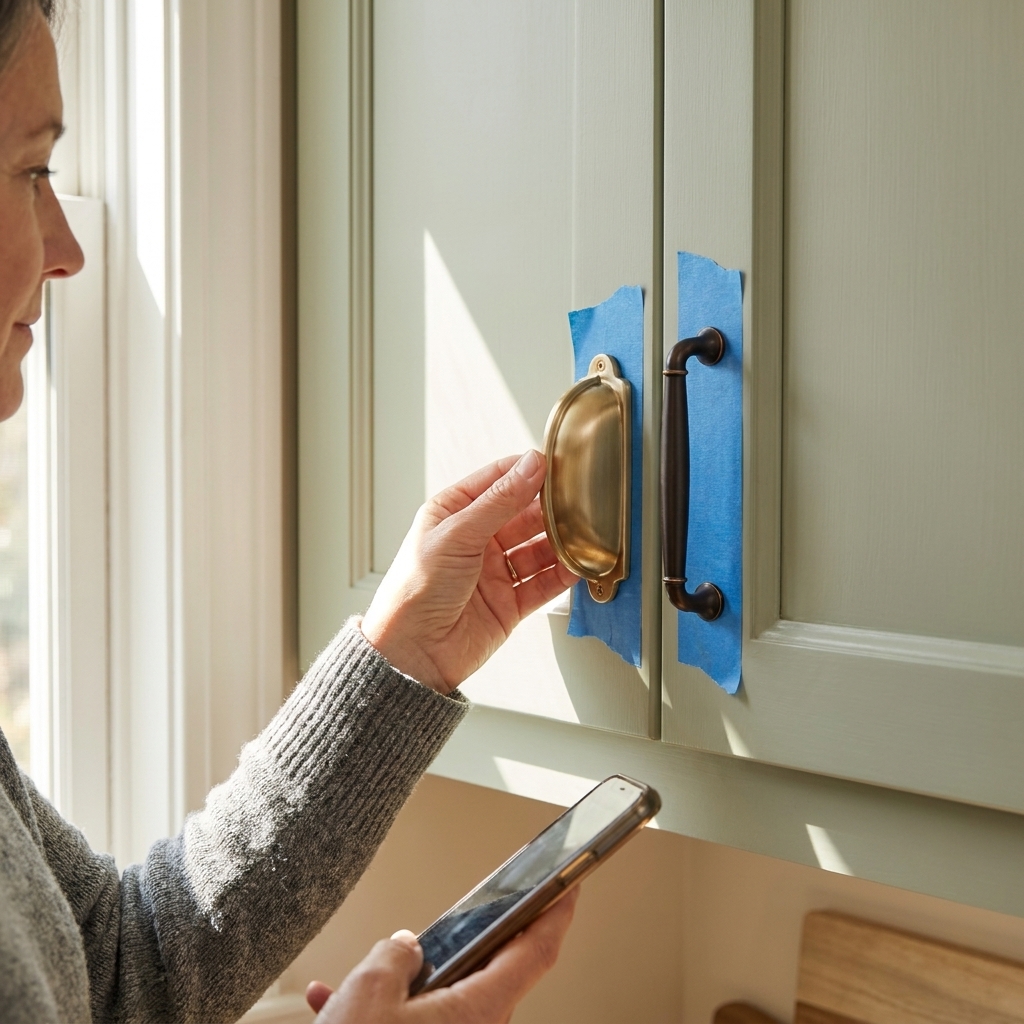
Before you commit to 30 pulls, do this:
- Order 1 to 2 knobs and 1 pull in each finish you are considering.
- Tape them in place on doors and drawers at different spots in the kitchen.
- Check them in morning, afternoon, and evening light.
- Look at them next to your faucet and lighting. If it feels calm, you nailed it.
This tiny step has saved me from more than one “why does this look weird?” return pile.
FAQ
Should my kitchen faucet match my cabinet hardware?
Not necessarily. Matching can look great, but it is not required. If they do not match, repeat each finish at least twice somewhere in the kitchen so it looks planned.
Can I mix three finishes?
Yes, and it is easiest when one is a neutral metal you already have a lot of, like stainless appliances. A common three-finish mix is stainless (appliances) + matte black (faucet or lights) + brass (hardware).
Do hinges have to match knobs and pulls?
No, but mismatched exposed hinges are noticeable. If you cannot replace them, try to repeat the hinge finish somewhere small so it reads intentional.
What finish hides fingerprints best?
In my experience, satin and brushed finishes tend to show less than polished. Matte black can show water spots around the sink depending on your water and the coating, so you may end up wiping it more often.
A simple weekend plan
If you want a no-stress approach while you are painting cabinets or doing a quick hardware swap, use this order:
- Decide the anchor finish (usually cabinet hardware).
- Choose one supporting finish (often faucet or lighting).
- Repeat each finish twice across the room.
- Keep shapes consistent even if finishes vary.
Mixed metals are one of those design choices that feel intimidating until you see how simple the rules really are. Once you have a plan, it is just shopping and a screwdriver.